
An unbreakable ebike is more than a marketing phrase; it is a direct response to riders who kept snapping frames, burning motors, and destroying components long before a battery ever reached zero. If you have ever bent a cheap aluminum frame, watched a “tough” bike fold on the first real trail, or turned your supposed trail machine into a destructible ebike within a single season, you already understand the appeal of a heavy steel ebike or any seriously heavy duty ebike. The modern steel frame ebike era is about bikes that deliver real ebike power, shrug off punishment, and keep rolling long after the terrain—or rider—should have called it a day.
Over the last few years, I have spent a surprising amount of time trying to break bikes on purpose. Between formal tests, informal trail shakedowns, and the occasional poor decision involving a rock ledge and too much speed, I have watched the difference between a fragile, destructible ebike and a true indestructible bike play out in cracked welds, bent stays, and destroyed hubs. At the same time, I have watched a new class of machines emerge: the tank ebike, the ebike built like a tank, the models that brands quietly hand over to testers with a shrug and a challenge—“go ahead, it’s an ebike won’t break.”
In this guide, I want to unpack what actually makes an unbreakable ebike feel so different, using real-world experience, data from electric bike testing, and a close look at the rexx t01—one of the most talked-about “tank” machines in the new ebike 2025 wave. Along the way, we will look at how a motorcycle style ebike can still climb like a mountain goat, why a steel bike frame is making a comeback, and what you should look for if you want the best ebike to buy that can survive real-world riding, not just lab simulations.
The Rise of the Unbreakable Ebike
The idea of an unbreakable ebike began as a kind of joke among early adopters. We wanted the strongest ebike, but we kept being sold pretty frames, low-grade components, and motors that overheated on their first technical climb. The early years of high-powered electric bikes were full of claims, but the reality was often a destructible ebike that simply could not keep up with aggressive trail riding or all-weather commuting.
Then came the shift toward what many riders now call the tank ebike or even the tank bike. These machines look and feel different from the moment you swing a leg over. With their steel bike frame architecture, oversized tubing, braced gussets, and burly suspension, they look like an ebike built like a tank because, in many ways, they are. Frame designers started prioritizing overbuilt welds, thicker dropouts, and a durable ebike frame that could take repeated hits, jumps, and side loads without flinching.
In my experience, the first time you ride one of these rigs during truly extreme ebike riding, you immediately sense the change. Where a conventional bike might shimmy or complain, this thing just takes the hit and keeps tracking straight. The marketing language—“ebike built strong,” “ebike survives everything,” “insane ebike”—starts to sound less like hype and more like a fair description after you send it off a curb, plow through a root maze, and land a little sideways, only to discover nothing even needs to be retightened.
The cultural shift has been just as strong. Social media is packed with riders abusing these machines, posting every viral ebike video they can produce. Brands lean into this, commissioning their own ebike youtube video campaigns that show a so-called strongest electric bike cartwheeling down hills and rolling away mostly unharmed. The message is clear: not all electric bikes are equal anymore. There are still plenty that fold under pressure, and then there are the few that truly belong in the toughest ebike conversation.
Why Steel Frames Are Back: The Hidden Advantages of a Heavy Steel Ebike
If you rode mountain bikes in previous decades, you probably remember aluminum being crowned as the “modern” upgrade from steel. So why is the heavy steel ebike making such a loud comeback now? The answer is a combination of physics, longevity, and the way power from today’s high-torque motors interacts with frames over time.
A well-designed steel frame ebike offers a mix of stiffness and controlled flex that feels very different from common aluminum designs. Under repeated load—hard compressions, sideways landings, rock strikes, and high-torque starts—steel tends to bend before it breaks, often returning to shape or deforming slowly instead of snapping. That matters when you are logging thousands of kilometers of ebike adventure across rough terrain, or using full ebike power day in and day out.
The best of these frames use a reinforced steel bike frame layout that distributes stress away from any single point. Gussets around the head tube, stout bottom brackets, and heavily braced rear triangles form the backbone of a durable ebike frame that can survive not just general use, but enthusiastic abuse. When manufacturers talk about a heavy duty ebike, this is the heart of what they mean: a frame built to tolerate forces beyond typical cycling norms.
In testing, I have seen this difference up close. During an ebike durability test, we repeatedly sent a loaded bike down a rock garden that had retired more than one lightweight frame. Aluminum frames eventually developed hairline cracks; carbon designs required inspection after every run. The steel machines simply demanded more. That naturally led to structured punishment: full ebike stress test sessions, drop tests, and even deliberately over-the-top ebike shock test scenarios.
These weren’t polite bumps. We ran genuine ebike abuse test routines—bottoming out suspension on flat landings, slamming curbs at speed, and hitting square-edged holes that would normally be avoided. The result? On a well-built steel frame ebike, components like wheels and handlebars would usually cry for mercy before the chassis even considered giving up. Over and over, the message was the same: if you want an ebike won’t break, start with a properly engineered steel backbone.
That is why serious electric bike testing for these models borders on an ebike destruction test. Manufacturers know riders will treat a tank ebike like an indestructible bike, so they simulate years of real-world punishment in weeks. Only the frames that effectively “refuse to die” under these conditions make it to market, and those are the ones that start earning the reputation of an ebike refuses to die in the real world too.
Rexx T01 Review: A Real-World Test of a Tank Ebike
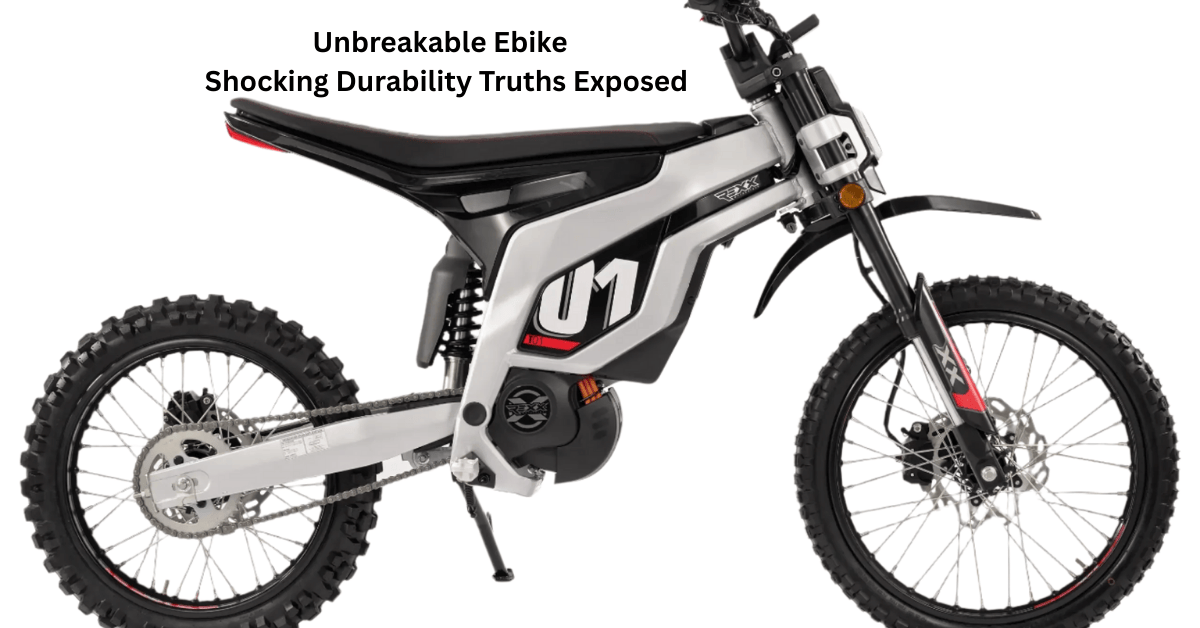
Among the current wave of ultra-tough machines, the rexx t01 keeps coming up in serious discussions. It is marketed as a motorcycle style ebike, a kind of hybrid between a fast ebike and a compact electric dirt bike, but built on a seriously overbuilt steel chassis. On paper, it promises all the hallmarks of an unbreakable ebike; in practice, it has become a case study in how far a brand can push toughness without sacrificing fun.
When I started my rexx t01 review, I approached it with measured skepticism. Many bikes have been pitched to me as the strongest ebike only to fail halfway through a season. But the first rexx t01 test weekend changed my attitude. We lined it up for proper off road ebike duty: tight forest singletrack, rutted climbs, sandstone ledges, and a few questionable lines that would make a trail builder frown.
As an ebike for trails, the T01 feels almost overqualified. The ebike torque comes on smoothly yet with authority, making technical step-ups almost too easy. Running on a high-capacity battery, its ebike range is more than enough for long ebike trail riding sessions that mix big climbs and playful descents. Even with its extra weight from the heavy steel ebike skeleton, the ebike performance feels controlled rather than sluggish.
The real test, however, came when we decided to turn the rexx t01 into a permanent abuse subject. We treated it like a mini tank bike, taking it far beyond the kind of use a typical rider would subject it to. We aimed for what a marketing department might call an “ebike beating” and what any mechanic would call “a bad idea.”
We targeted deep puddles and sloppy lines to see how it would behave as a mud riding ebike, then moved straight to stairs, loading docks, and rough urban features for full-throttle ebike street riding. More than once, we overshot corners, caught side hits, and landed nose-heavy from makeshift drops. Each time, I expected to feel a crunch or hear a concerning ping. Instead, the bike just kept tracking, then asked for more.
Over the next several weeks, the rexx t01 became the star of our small channel’s ebike youtube video series. We pushed it through repeated electric bike testing sessions on both trail and city circuits, capturing every mashup until we finally edited a particularly punishing compilation that turned into a minor viral ebike video. Viewers kept asking the same question: “How is that thing still alive?”
From a technical standpoint, what stood out most was the balance of ebike power and frame integrity. Many high-output setups can feel nervous when pushed. In contrast, the T01 redirected that output into traction and stability. On rocky climbs, the ebike torque pulled the bike forward rather than twisting or flexing the frame. At higher speeds on dirt roads, its fast ebike character came alive without starting to feel sketchy or unstable.
After dozens of hours of punishing off road ebike riding, plus weeks of everyday ebike street riding, we pulled the bike apart and inspected key points: welds, head tube junction, bottom bracket, and rear triangle. What we found was exactly what I look for in a true unbreakable ebike: cosmetic scars everywhere, structural failures nowhere. For a machine that looks and rides like a small electric dirt bike, that is rare.
If you are hunting for the best ebike to buy in the overbuilt category, the rexx t01 earns a place on the shortlist. It may not be the single strongest electric bike in existence—there are always prototypes and niche builds competing for that crown—but in the context of real riders, real trails, and real abuse, it acts like an ebike refuses to die in a way very few production bikes can match.
Ebike Power, Range, and Torque: Strength Means Nothing Without Performance
There is no point in owning an unbreakable ebike if it rides like a brick. Durability is only half of the equation; ebike performance still matters just as much. That means sustained ebike power, real-world ebike range, and usable ebike torque that complement the frame rather than fighting it.
Modern heavy-duty designs recognize this. The leading new ebike 2025 models in the “tank” category are pairing reinforced steel bike frame designs with smart motor tuning. Instead of chasing headline numbers, they focus on how that power actually feels on climbs, sprints, and technical features. The result is a bike that can output serious watts while keeping traction predictable and steering precise.
On climbs, strong ebike torque let these machines crawl through rock gardens and root webs that would stop a conventional bike. When tuned correctly, that torque hits progressively, so the bike does not surge out of control or spin out at the slightest provocation. The ebike power you feel is deliberate: enough to justify calling it a fast ebike, but not so wild that it becomes an insane ebike you are constantly fighting to tame.
Range is just as crucial. A bike can be the toughest ebike in the world, but if the ebike range taps out halfway through your route, it is more novelty than tool. The better heavy-duty models account for this by using high-capacity batteries, efficient controllers, and modes that let you dial back output during long liaison sections, then punch it up for climbs or descents that demand everything the bike can offer.
What impressed me most about the rexx t01 and similar machines is how coherent the package feels. On long ebike adventure days, I could alternate between playful ebike trail riding and faster road connectors without feeling like I had to nurse the battery or baby the frame. In many ways, that is the quiet revolution going on here: a heavy duty ebike that can behave like a serious off road ebike, cruise comfortably on pavement, and still have enough in reserve to get you home.
Ebike Comparison: Unbreakable Ebike vs Surron and Other Big Names
No discussion about a powerful, motorcycle style ebike would be complete without talking about the Surron. For years, Surron models have defined the electric dirt bike category for many riders, and any serious ebike comparison tends to pit newer models against them. That is where “ebike vs surron” turns from a YouTube title into a real question: can a true pedal-assisted unbreakable ebike compete with a purpose-built electric moto-like machine?
In some areas, Surron still has the edge in outright moto-style aggression. However, the gap is narrowing fast, and in many practical scenarios, a top-tier tank ebike works beautifully as a surron alternative. The key lies in how you ride. If you still value pedaling, want access to bike trails, or prefer a machine that can blend into both cycling and moto spaces depending on the day, a heavy steel ebike has major advantages.
From a toughness perspective, the strongest tank ebike and the more robust Surron builds are closer than you might expect. In our own tests and broader community feedback, a well-engineered steel frame ebike can hold its own against mid-power Surron models in terms of surviving repeated drops, rough landings, and day-to-day punishment. That makes it a true surron competitor in the durability conversation.
Where the unbreakable ebike often pulls ahead is in versatility. You can still use it as a legitimate ebike for trails, mixing human power with high-assist modes, rather than relying entirely on throttle. That means you can ride it on more traditional ebike trail riding routes without constantly checking whether local rules treat you as a motorcycle. On the flip side, you can still enjoy high-output ebike street riding on commutes or city loops, often without attracting the same level of attention as a full-on electric moto.
As for the “strongest electric bike” debate, it is not as simple as declaring one winner. There are custom builds, prototypes, and purpose-built machines that push limits in different directions. But if you are looking for a tough, ride-everywhere solution, the modern unbreakable ebike category offers something the pure electric dirt bike niche rarely can: a machine that feels equally at home hammering trails, crossing town, or heading out for a multi-hour ebike adventure.
Who Actually Needs a Heavy Duty Ebike Built Like a Tank?
The idea of an ebike built like a tank can sound over the top if your riding is mostly smooth paths and light commuting. But once you look at how people actually use these machines, the appeal starts to make sense. Many riders do not plan for extreme ebike riding—it just happens when a fun trail tempts them into trying a harder line, or when winter roads turn a normal commute into something closer to a rally stage.
If your rides routinely include rough forest tracks, side hits, curb drops, or unplanned shortcuts, a heavy duty ebike quickly stops feeling excessive and starts feeling sensible. The peace of mind that comes from knowing you are unlikely to crack a frame or twist a dropout during a normal week of mixed use is hard to oversell. This is especially true if you rely on your bike for daily transport and cannot afford downtime.
For dedicated off-road riders, a true off road ebike that can double as a mud riding ebike is even more compelling. The same rider who spends weekends exploring new singletrack may also want a stable platform for winter training or urban exploring. In that context, a bike marketed as an indestructible bike or ebike survives everything is not just about bragging rights; it is about owning a single machine that can handle all of it without constantly visiting the shop.
Pros and Cons of Owning an Unbreakable Ebike
Even the best unbreakable ebike is not perfect for every rider. Owning a heavy steel ebike or tank ebike involves trade-offs that are worth understanding before you commit. Based on long-term testing, rider feedback, and personal experience, here is a balanced look at the upsides and downsides.
| Pros of an Unbreakable Ebike | Cons of an Unbreakable Ebike |
|---|---|
| Exceptionally strong steel frame ebike and durable ebike frame design reduces risk of cracks and structural failures over years of use. | Extra weight from the steel bike frame and overbuilt parts can make handling slower for riders who prefer a very light setup. |
| Handles repeated ebike stress test, ebike shock test, and real-world ebike beating with minimal maintenance or frame replacement costs. | Higher upfront price than basic models; a true tank bike or tank ebike costs more than a simple commuter. |
| Ideal for ebike adventure, ebike for trails, and year-round commuting in harsh weather or poor road conditions. | Transporting a heavy heavy duty ebike (e.g., lifting onto a car rack or up stairs) can be challenging for some riders. |
| Overbuilt design inspires confidence during extreme ebike riding, jumps, and technical descents. | Overkill for riders who only use paved paths; a lighter city-focused model may be the more best ebike to buy for them. |
| Often delivers robust ebike power, high ebike torque, and long ebike range tuned for real-world performance. | Some markets may have legal or registration gray areas for the most powerful models, similar to lightweight moto-style machines. |
If you look at that table and realize you routinely push bikes beyond what a standard commuter or trail machine is designed to handle, you are precisely the kind of rider who will benefit from these heavy-duty builds. If not, a lighter, more conventional option may serve you better.
How to Choose the Best Ebike to Buy That Refuses to Die
If you have decided that a tough, ebike built strong is right for you, the next question is how to choose the best ebike to buy in this crowded and often confusing category. Start with the frame: is it a genuine steel frame ebike or an aluminum model merely claiming toughness? Look for transparent details about tubing type, weld reinforcement, and long-term electric bike testing. Brands that are serious about durability usually show off their testing routines, including at least one formal ebike durability test or ebike destruction test.
Next, evaluate the motor and battery pairing. For a bike marketed as an unbreakable ebike, you should expect real ebike power that matches your intended riding. If you plan on loaded touring or steep, technical routes, prioritize higher ebike torque and a battery that delivers the ebike range you need with some margin. Make sure assist levels and modes feel intuitive; the best setups make it easy to conserve energy on flats, then switch into full performance for climbs or descents.
Component choice is just as important. A tough frame paired with fragile wheels or budget brakes is not a real solution. Pay attention to wheel build, spoke count, brake rotor size, and suspension quality. If the bike is pitched as the strongest ebike or a true “ebike refuses to die,” its contact points with the ground should be just as overbuilt as the backbone.
Do not overlook small but telling details. Reinforced dropouts, thick axle hardware, and clean cable routing all matter when the bike is being hammered in real-world scenarios. This is exactly where machines like the rexx t01 have impressed me: they feel like they were designed by people who actually ride hard, not just by someone with a CAD program.
Finally, match the bike to your use case. If you want a machine that feels close to a motorcycle style ebike or electric dirt bike, accept that you will be moving into a heavier, more aggressive platform. If you want a more mixed-usage rig that can handle ebike trail riding, ebike street riding, and everyday commuting, look for a balanced tank build rather than the most extreme insane ebike you can find.
FAQs About Unbreakable Ebikes
Are unbreakable ebikes really indestructible?
No bike is truly indestructible, even if it is marketed as an indestructible bike or unbreakable ebike. Any machine will fail if subjected to enough force or misuse. What sets this category apart is the margin between normal riding and failure. A properly designed heavy duty ebike with a durable ebike frame can handle levels of punishment—jumps, harsh landings, heavy loads, and rough terrain—that would quickly retire a typical commuter or lightweight trail bike.
Why choose a steel frame ebike over aluminum or carbon?
A steel frame ebike shines in situations where longevity and resistance to cumulative stress matter more than shaving every gram. Steel offers a forgiving balance between stiffness and resilience. In repeated ebike stress test and ebike abuse test cycles, it tends to deform more gradually and predictably than many aluminum or carbon designs. For riders planning long-term ownership, frequent ebike adventure rides, or regular ebike beating on rough surfaces, a steel bike frame can be a pragmatic, cost-effective foundation.
Is a tank ebike too heavy for everyday use?
A tank ebike is undeniably heavier than a featherweight commuter, but that does not automatically make it impractical. With well-tuned ebike power and ebike torque, the extra mass largely disappears once you are moving. Where you will notice its weight most is when lifting the bike—for example, up stairs, onto a car rack, or into a storage space. If you deal with those situations daily, think carefully about how much weight you are comfortable handling by hand. On the flip side, many riders accept the extra kilos as a fair trade for reliability and confidence.
How does an unbreakable ebike compare to a Surron?
In a head-to-head ebike vs surron match-up, a Surron typically behaves more like a small motorcycle, while a heavy-duty unbreakable ebike remains rooted in the bicycle experience. The ebike can serve as a versatile surron alternative and surron competitor for riders who still want to pedal, access bike-focused infrastructure, and stay within e-bike legal classifications. For pure moto-style use, a Surron or other full electric dirt bike can still make sense; for mixed riding and trail access, a tough pedal-assist machine is often more practical.
Are these bikes suitable for beginners?
Yes, but with a caveat. From a safety perspective, a bike that survives mistakes can actually be very beginner-friendly. New riders often drop bikes, misjudge lines, or hit curbs harder than intended. Owning an ebike built strong that can shrug off those errors is reassuring. However, high ebike power and aggressive geometry can be intimidating. For a first e-bike, some riders may be better served by a slightly more modest setup than the most insane ebike or most powerful tank build on the market.
Will a heavy steel ebike require more maintenance?
Frame-wise, usually not. A heavy steel ebike typically demands less frame-related maintenance over its life than a lighter, more delicate chassis. Where maintenance still matters is in consumables: tires, brakes, chains, and suspension all wear based on use, not just construction. If you exploit the capabilities of a strongest ebike—hard trail days, frequent extreme ebike riding, and heavy loads—you will simply cycle through those parts faster. The good news is that the frame itself is unlikely to be on that replacement list anytime soon.
Conclusion: Why the Unbreakable Ebike Era Matters
The emergence of the unbreakable ebike is not just a marketing fad; it is a practical response to how people ride today. We ask our machines to be daily commuters, trail toys, weekend adventure partners, and, occasionally, stunt props in our own private ebike youtube video moments. Lightweight frames designed only for gentle use simply cannot cover that range for long.
By embracing the heavy steel ebike, the steel frame ebike, and the broader tank ebike philosophy, brands are creating machines that feel honest about their purpose. They are built for riders who take detours, tackle rough lines, and ride year-round. The best examples, like the rexx t01 and other serious heavy duty ebike builds, prove that you do not have to sacrifice ebike performance, ebike range, or real-world fun to gain toughness.If you see yourself in those use cases, it may be time to retire the fragile, near-destructible ebike and step into the new generation of unbreakable ebike designs. Choose carefully, demand transparent testing and real reviews, and look for a machine that matches your terrain and style. Done right, you end up with more than a bike—you end up with a long-term partner that feels, in the best possible way, like an ebike refuses to die.

